
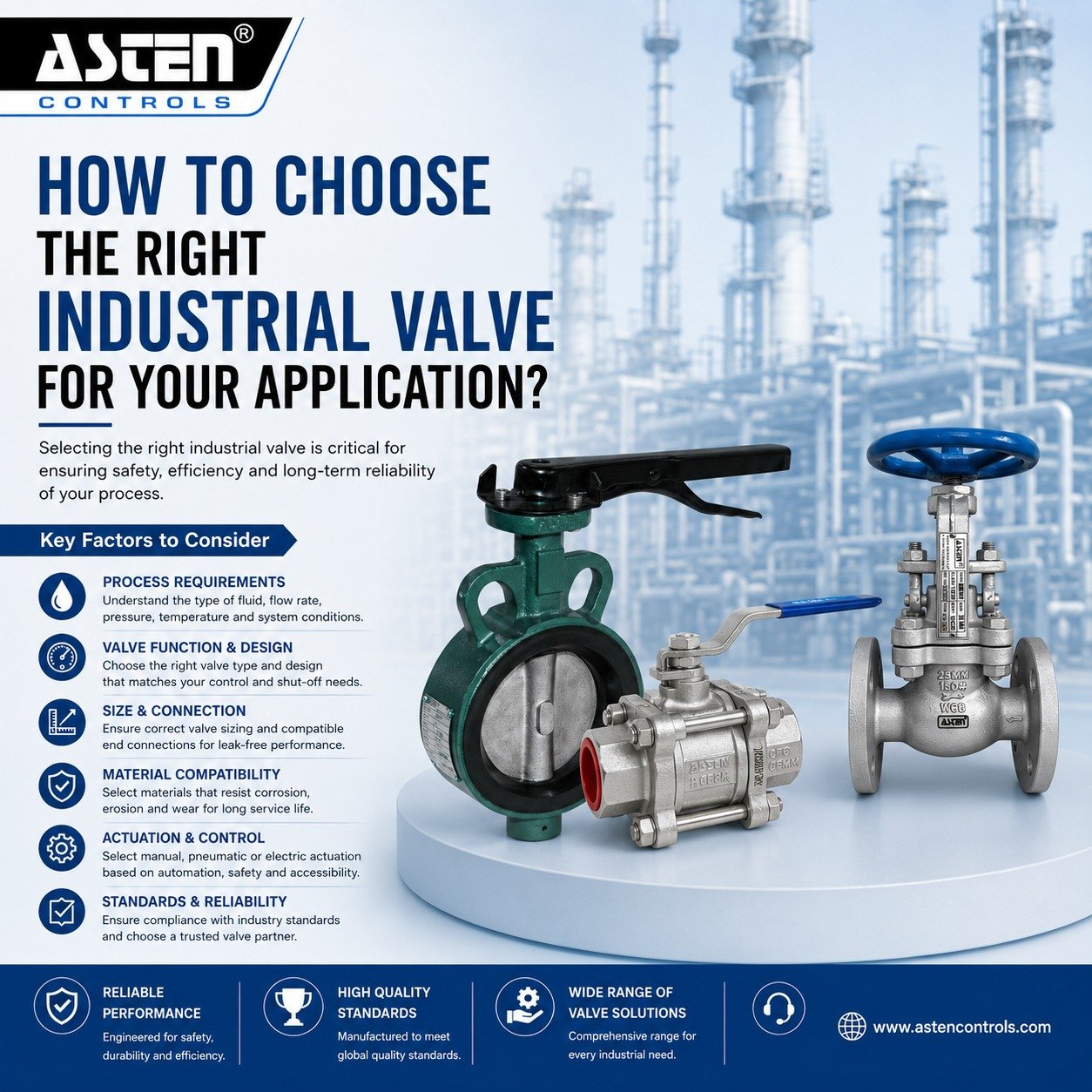
How to Choose the Right Industrial Valve for Your Application?
DescriptionChoose the Right Industrial Valve
Industrial valves are critical in every piping system since they regulate the flow of liquids, gases, steam and chemicals in all sorts of industries. Be it refineries, chemical plants, water treatment plants, and food manufacturing facilities, the choice of the valve affects the performance of the process, reliability of the equipment and even worker safety.
Why Choosing the Right Industrial Valve Matters?
Valve selection is not merely a matter of choosing an appropriate component for your piping system. Every application has its own special conditions that should be evaluated carefully.
The Importance of Proper Valve Selection
A good valve provides smooth flow control, reliable shut-off, longer lifespan of the equipment, and meets industry standards. The right choice will minimize the need for maintenance and avoid unexpected downtime.
The wrong valve may lead to leaks, pressure loss, corrosion, increased wear, and costly repairs.
Impact on Safety, Performance & Operating Costs
A correctly chosen valve provides operational savings without jeopardizing reliability.
Understanding Different Types of Industrial Valves
Industrial valves have various designs which perform different tasks. The knowledge of their role is the first step towards selecting the appropriate industrial valve.
Ball Valves
The design of industrial ball valves involves the rotating ball with a bore.
Suitable for:
- Rapid shut-off
- Oil and gas industry
- Processing chemicals
- Water lines
- High-pressure systems
Advantages
- Tight seal
- Low pressure drop
- Low maintenance
- Life expectancy
Butterfly Valves
The regulation of flow through butterfly valves is accomplished by means of the rotating disk in the pipe.
Suitable for:
- Big diameter pipelines
- Water treatment plants
- HVAC systems
- Services of low or moderate pressure
Advantages
- Light in weight
- Reasonable in price
- Compact in design
- Easy to install
Selection of butterfly valves is appropriate where weight and space matters.
Gate Valves
Gate valves function through lifting or lowering of a gate to start or stop flow.
Applications of gate valves are as follows:
- Oil pipelines
- Water distribution
- Steam systems
- Isolation services
They are built to provide complete open or complete shut positions and not for throttling.
Globe Valves
These valves are made to regulate flow with accuracy.
Globe valves are used in:
- Steam systems
- Cooling systems
- Process control systems
- Chemical industries
These provide better throttling performance than gate valves.
Check Valves
Check valves allow flow in one direction and prevent flow in reverse direction.
Their common uses include:
- Pump discharge lines
- Water supply systems
- Chemical transfer systems
- Compressors
Selecting a proper check valve will protect equipment from backflow.
Plug Valves
Plug valves have a cylindrical or tapered plug for flow control.
Their common applications include:
- Chemical Processing
- Fuel Systems
- Slurry Applications
- Corrosive Media
Key Factors to Consider When Selecting an Industrial Valve
Selection of the right valve requires consideration of a number of operating parameters.
Type of Fluid
It is necessary to understand the nature of the fluid passing through the pipe:
- Water
- Steam
- Oil
- Gas
Sealing requirements depend on the nature of the fluid.
Operating Pressure
Each valve has a rated operating pressure.
The valve to be chosen must have a pressure rating higher than that of the system being operated.
Operating Temperature
Temperature greatly influences the operation of valves.
In high-temperature applications special materials and sealers are needed to handle thermal expansion and continuous heat resistance.
Valve Size
Valve size must coincide with the system and flow rate capacity.
Large or small valves decrease efficiency and cause excessive wear.
Corrosion Resistance
If there is corrosive medium, the valve must be corrosion resistant.
Corrosion resistant valves require less maintenance and have extended lifespan.
Maintenance Requirements
To choose valves which are easy to maintain and inspect.
Low maintenance valves decrease lifecycle costs and production downtime.
How Different Industries Select Industrial Valves
All industries have different requirements for their operations.
Oil & Gas
The valves used in the oil and gas industry should be able to handle:
- High pressure
- High temperature
- Aggressive fluids
- Concentration
Commonly used valves are ball valves, gate valves, and control valves.
Chemical Processing
For valves used in the chemical industry, corrosion resistance and durability to aggressive materials are important.
Material compatibility comes first.
Power Generation
Valves that can deal with:
- Concentration of high-pressure steam
- High temperature
- Concentration
Globe valves, gate valves, and control valves are common types of valves in this industry.
Food & Beverage
Food grade valves require:
- Hygienic design
- Easy to clean
- Resistant to corrosion
- Sanitation requirements
Stainless steel valves are mostly preferred.
Similarly many industries like Pharmaceutical, Marine, Wastewater and HVAC Systems select industrial valves based on their application, requirements and working conditions.
Choosing the Right Valve Material
Selection of material is equally significant as valve selection.
Stainless Steel Valves
Useful for:
- Food processing industry
- Pharmaceutical industry
- Chemical plant
These valves are highly corrosion-resistant and durable.
Carbon Steel Valves
Recommended for:
- Oil & Gas services
- Steam
- Industrial services
High in strength but affordable.
Alloy Steel Valves
Used for:
- High-pressure systems
- High-temperature services
- Power plant
High in mechanical strength.
PVC & Plastic Valves
Applications suitable for:
- Chemical dosing
- Water treatment
They offer good resistance to chemicals and are light.
Manual vs Automated Valves
The importance of automation in industrial process automation has increased.
Manually Operated Valves
Manually operated valves are suitable for:
- Small scale systems
- Less frequent valve operations
- Lower cost installations
They are easy to install and maintain.
Pneumatically Operated Valves
Pneumatic actuators work with compressed air.
Their advantages include:
- Quick response
- Good reliability
- Explosion-proof operation
Electrically Operated Valves
Valve positioners help in achieving the desired valve positions.
Electric valve actuators are widely used in:
- Automated plants
- Water treatment plants
- HVAC
When Automation Valves are Preferred
In case of:
- Often performed operations
- Necessity of remote control
- Critical process consistency
- The necessity to avoid human interference
Common Valve Selection Mistakes to Avoid
Improper selection can lead to increased maintenance and higher costs.
Selection of the Inappropriate Type of the Valve
A butterfly valve in situations where fine control is required or a gate valve is used for regulating flows can have a very poor impact on efficiency.
Ignoring the Pressure Rating of a Valve
Make sure that the pressure rating of your valve meets or surpasses the pressure requirements in your system.
Ignoring Material Compatibility
Use of wrong materials can result in corrosion, contamination, leakages, and shorter service life.
Why Choose Asten Controls?
Asten Controls is a trusted industrial valve manufacturer and supplier in India. Our valves are developed to meet the diverse needs of various industries. With proven expertise in customized valve solutions, lifelong performance and reliability, we help businesses to choose the right valve solutions to fulfil their application requirements. Our commitment to quality, precision manufacturing, and customer support ensures efficient operations, improved safety, and long-term value for every important project.
Frequently Asked Questions
What is the best industrial valve for high pressures?
Ball valves, gate valves, and specific control valves are popular among industrial users of high pressure systems.
How do I determine what valve material will work well?
Consider the properties of the medium flowing through the valve, temperatures, pressures, possibilities of corrosion and relevant industrial standards. Some examples of materials that are suitable for certain valve applications include stainless steel, carbon steel, alloy steel, bronze, and plastics.
Should I use a ball valve or a butterfly valve?
Ball valves should be used for situations where complete shut-off is essential, higher pressures are present and leak-tight operation is necessary. Butterfly valves can be considered for applications dealing with large diameter pipelines due to their smaller size and lower weight.
What is the difference between manual and actuated valves?
Manually operated valves are manually controlled through hand-wheel or lever and automatic valves can be operated by either pneumatic or electrical actuators. Automated valves are more appropriate for situations requiring remote control and frequent operation.
Are you looking to help in picking the appropriate valves?
Yes. An experienced industrial valve manufacturer or an industrial valve supplier will be able to suggest the best valves for your application, depending on fluid type, operating conditions, materials of construction, pressure rating, and automation requirements.
Conclusion
The proper selection of industrial valves requires a good knowledge of process conditions such as media, operating pressure, operating temperature, flow rate, materials of construction, corrosion resistance, and automation requirements. Proper consideration of valve selection criteria helps in ensuring that you have reliable performance, improved safety, reduced maintenance cost, and longevity.


