

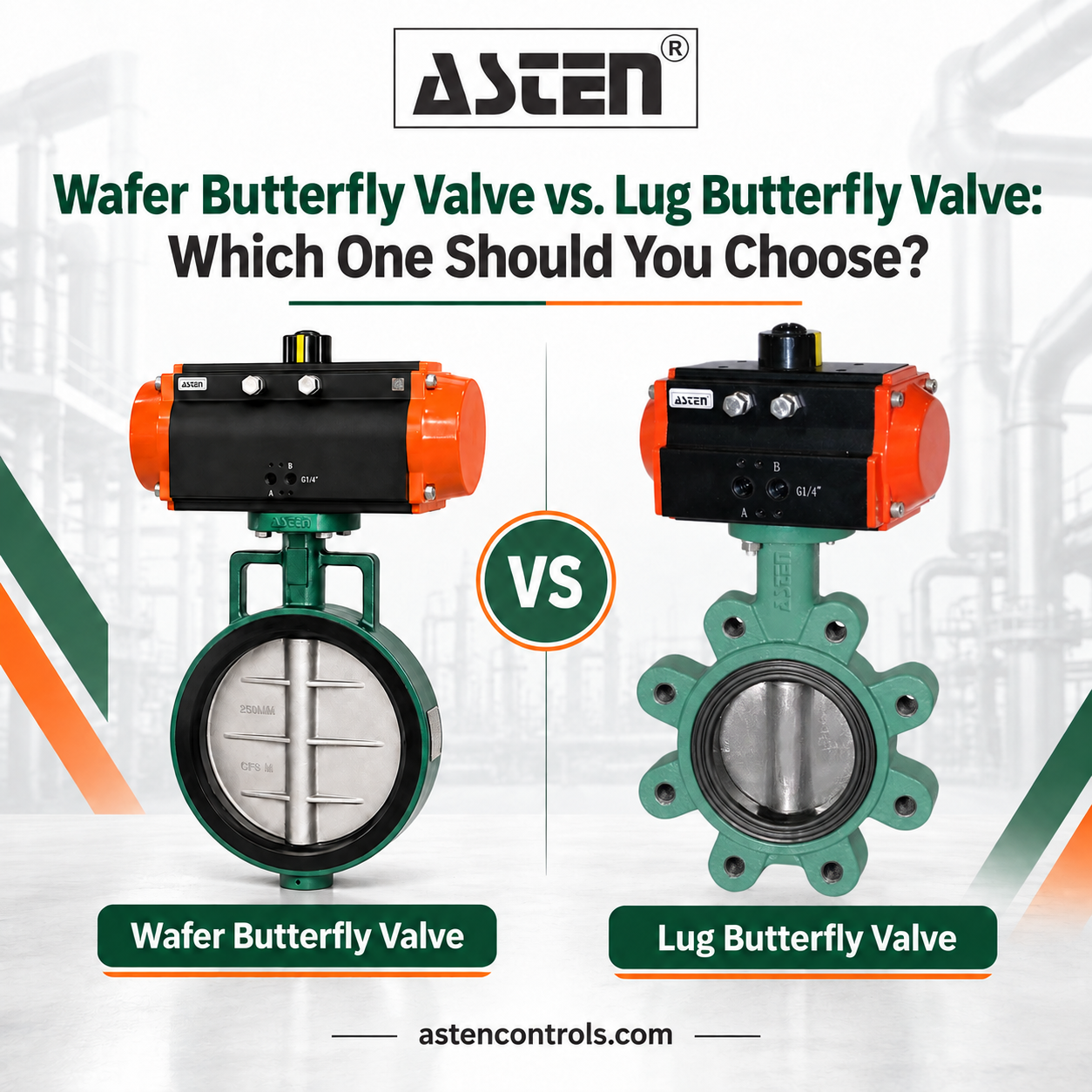
Wafer Butterfly Valve vs. Lug Butterfly Valve: Which One Should You Choose?
DescriptionWafer and Lug Butterfly Valve
Both the wafer and lug butterfly valves are quarter turn valves that can be used for flow isolation and flow control. However, the body construction of the wafer butterfly valve and lug butterfly valve varies. A wafer butterfly valve is normally fitted in-between two pipe flanges while a lug butterfly valve uses threaded or tapped lugs for individual bolting to the pipe flanges. A good understanding of the difference between wafer butterfly valve vs lug butterfly valves enables one to choose the best valve for flow control.
What Is a Wafer Butterfly Valve?
A wafer butterfly valve is a compact valve that can fit between two pipe flanges. It is a quarter turn valve used to control the flow of liquids, gases, and other process media. The body of the valve is usually held in place by long bolts or studs passing through the flanges and body of the valve. The valve contains a circular disc fixed to a stem that is rotated about 90 degrees for opening and closing of the flow path. It is mainly used in the water, pharma, power, food-beverage, treatment of the wastewater and chemical processing.
The installation of a wafer butterfly valve should include appropriate positioning of the mating flanges. The valve itself is placed between flanges and the bolts are tightened evenly in accordance with the installation requirements.
How Does a Wafer Butterfly Valve Work?
A wafer butterfly valve controls flow through a rotating disc mounted on a shaft. With a simple quarter-turn operation, the disc rotates to open or close the flow passage. When the disc is aligned with the pipeline, flow can pass through; when it turns across the flow path, the valve closes against the seat. Depending on the application, the valve can be operated manually or with pneumatic or electric actuators.
Key Features of Wafer Butterfly Valves
Key features of wafer butterfly valves include compact construction, lightweight design, space-saving installation, quarter-turn operation, reliable flow isolation, and low maintenance requirements. They can also be configured with different body, disc, and seat materials and operated using hand levers, gearboxes, pneumatic actuators, or electric actuators to suit different industrial requirements.
Due to the placement of the valve between two flanges, this kind of valve will often require less space and fewer materials than certain other types of butterfly valves.
Common Applications of Wafer Butterfly Valves
Wafer butterfly valves are widely used where efficient flow isolation and control are required in industrial piping systems. Common applications include water, pharma, power, food-beverage, treatment of the wastewater and chemical processing, pulp and paper, and utility piping. The appropriate valve configuration depends on factors such as the process medium, pressure, temperature, pipe size, and material compatibility.
What Is a Lug Butterfly Valve?
A lug butterfly valve is a quarter-turn valve. Its body shape is different from that of a wafer butterfly valve. The body shape involves several lugs on the valve body and individual bolts for attaching the valve on both sides to the respective flanges of the pipes.
The lug style body offers more flexibility during maintenance because one side of the piping could possibly be disconnected while the valve remains connected to the other flange, depending on the type of the valve and service condition.
Installation of lug type butterfly valves involves positioning of the valves between the pipe flanges and bolting of each of the flanges to the corresponding lugs. It is important to properly tighten the bolts and to ensure good flange alignment.
Applications of lug type butterfly valves involve water and wastewater treatment plants, industrial process piping, chemicals, HVAC and many others applications where there is need for flexibility and individual line isolation.
How Does a Lug Butterfly Valve Work?
A lug butterfly valve controls flow using a circular disc mounted on a central shaft. Rotating the shaft approximately 90 degrees moves the disc between the fully open and closed positions. The valve can be operated manually or fitted with pneumatic or electric actuators for automated flow control and isolation.
Key Features of Lug Butterfly Valves
Key features include a lug-style body, threaded mounting points, compact construction, quarter-turn operation, and independent flange bolting. The individual bolting arrangement can make maintenance and equipment isolation more convenient, particularly in systems where one side of the pipeline needs to be disconnected.
Common Applications of Lug Butterfly Valves
Lug butterfly valves are commonly used for water and wastewater treatment plants, industrial process piping, chemicals, HVAC and general process piping. Their selection depends on factors such as pipe size, pressure rating, operating temperature, media, and required valve materials.
Wafer Butterfly Valve vs Lug Butterfly Valve: Key Differences
| Feature | Wafer Butterfly Valve | Lug Butterfly Valve |
| Body design | Wafer-style | Lug-style |
| Installation | Between pipe flanges | Bolted to individual flanges |
| Weight | Generally lighter | Generally heavier |
| Space | Compact | Requires somewhat more connection hardware |
| Installation cost | Often lower | Can be higher |
| Maintenance | Depends on piping arrangement | Can simplify certain isolation/maintenance configurations |
| Dead-end service | Application-dependent | Often selected where dead-end/independent flange connection is required, subject to design rating |
| Line isolation | Depends on system arrangement | Can allow one side to be disconnected in suitable applications |
| Typical use | General isolation and flow control | Applications requiring lugged connection and specific maintenance/isolation arrangements |
Connection and Installation Differences
The main difference is in how the valves are mounted. A wafer butterfly valve is installed between two pipe flanges using through-bolts, while a lug butterfly valve has threaded lugs that allow each flange to be bolted separately. This makes lug valves more convenient for maintenance and sectional pipeline isolation.
Maintenance and Replacement Differences
A lug butterfly valve generally offers easier maintenance and replacement because each side is independently bolted to the pipe flanges. A wafer valve may require more care during removal since its installation uses shared through-bolting between the flanges.
Weight and Space Considerations
Both designs are compact compared with many other valve types. Wafer butterfly valves are generally lighter and more space-saving, making them suitable for installations where weight and available space are limited. Lug butterfly valves may require slightly more space and provide added flexibility for pipeline maintenance.
Cost Considerations
Wafer butterfly valves are generally more cost-effective due to their simpler, lightweight construction and lower installation requirements. Lug butterfly valves may have a higher initial cost but can offer better maintenance flexibility, which may provide long-term value depending on the application.
Dead-End Service Considerations
For dead-end service, a lug butterfly valve is generally preferred because its independent bolting allows the valve to be installed and maintained without requiring a flange on the downstream side. Wafer butterfly valves are typically better suited to standard installations between two flanges.
Wafer Butterfly Valve vs. Lug Butterfly Valve: Advantages and Disadvantages
Advantages of Wafer Butterfly Valves
Main advantages of wafer butterfly valves are small size, low weight, easy installation and generally lower cost of the valves. Their size makes them well suited for applications where equipment weight is an important consideration. They are extensively used for general isolation and flow control purposes.
Drawbacks of Wafer Butterfly Valves
A wafer butterfly valve normally relies on both pipe flanges to secure the valve in place. Therefore, it is not appropriate for applications that need the separate removal of one side of the piping system. Maintenance can be complicated by the fact that removing one pipe flange might interfere with the installation of the valve.
Advantages of Lug Butterfly Valves
Some of the benefits associated with lug butterfly valves are that they offer individual flange bolting, improved flexibility when it comes to maintenance, and can be used in situations where line isolation is required independently. The lug design makes it easy to remove or service downstream piping without having to remove the valve from the opposite side.
Drawbacks of Lug Butterfly Valves
Lug butterfly valves are typically heavier and can be relatively more expensive to buy compared to their wafer counterparts. They also occupy slightly more installation space because of their body and bolting configuration.
Wafer vs Lug Butterfly Valve: Which One Should You Choose?
The right butterfly valve depends on your piping configuration, available space, maintenance requirements, and operating conditions. Both wafer and lug butterfly valves offer reliable flow isolation, but their connection methods make them better suited to different applications.
Choose a Wafer Butterfly Valve When…
A wafer butterfly valve can be a suitable choice when:
- Compact installation and space saving are important.
- Lower valve weight is desirable.
- Space around the pipeline is limited.
- General flow isolation is required.
- The piping configuration supports installation between two flanges.
Choose a Lug Butterfly Valve When…
A lug butterfly valve may be preferred when:
- Individual flange connections are required.
- Maintenance or pipeline isolation favors lug construction.
- Dead-end service is required and the valve is appropriately rated for it.
- The specific piping arrangement makes lug installation more practical.
How to Select the Right Butterfly Valve?
When selecting butterfly valves, factors such as piping arrangement, pressure and temperature rating, fluid being used, material of construction and seating, desired shut-off efficiency, space constraints, ease of maintenance, and relevant standards must be considered.
Consider the Pipe Size
Select a valve size that matches the pipeline diameter and provides suitable flow capacity. Proper sizing helps ensure efficient operation and reliable flow control.
Check Pressure Rating
Check the valve’s pressure rating against the maximum operating pressure of the system. The valve should be suitable for the pressure conditions of the application.
Evaluate Temperature
Consider the minimum and maximum operating temperature when selecting the valve. Temperature can affect the performance of the valve body, disc, and seat materials.
Identify the Process Media
Identify whether the valve will handle water, air, chemicals, gases, or other process media. Media compatibility is important for selecting suitable valve materials and ensuring reliable service.
Check Body and Disc Materials
Choose body and disc materials based on the pressure, temperature, corrosion conditions, and process media. Common material options vary according to the application requirements.
Select the Appropriate Seat Material
The seat material should be compatible with the process media and operating temperature. Selecting the right seat helps provide reliable sealing and service life.
Consider Manual or Automated Operation
Determine whether the valve will be operated manually or automatically. Lever handles and gear operators are suitable for manual applications, while pneumatic or electric actuators can be used where automated control is required.
Check Applicable Design and Testing Standards
Before selecting a butterfly valve, verify the applicable design, material, pressure, and testing standards for your application. Compliance with the required standards helps ensure suitable performance and reliability.
Applications of Wafer and Lug Butterfly Valves
Wafer and lug butterfly valves are widely used for flow isolation and control across different industrial systems. The right valve configuration depends on factors such as pressure, temperature, process media, pipe size, and installation requirements.
Water and Wastewater Treatment
Butterfly valves are commonly used in water supply, filtration, pumping, and wastewater treatment systems for reliable flow isolation and control.
HVAC Systems
In HVAC systems, butterfly valves help regulate and isolate water flow in chilled-water, cooling, and heating circuits while offering a compact installation solution.
Chemical Processing
Butterfly valves can be used in chemical processing systems when the valve body, disc, and seat materials are compatible with the process media and operating conditions.
Oil and Gas
In suitable oil and gas applications, butterfly valves are used for pipeline isolation and flow control. Valve selection should consider the media, pressure, temperature, and applicable standards.
Power and Energy
Butterfly valves are used in power and energy systems for applications such as cooling water, utility services, and other process piping where reliable isolation is required.
Food and Beverage
Butterfly valves are commonly used in food and beverage processing systems for hygienic flow control and isolation, with material selection based on the process requirements.
Pharmaceutical Applications
In pharmaceutical processing, butterfly valves can be used for flow isolation and control where hygienic design, suitable materials, cleanability, and process compatibility are important.
Wafer vs. Lug Butterfly Valve: Frequently Asked Questions
What is the difference between wafer and lug butterfly valves?
While the key difference lies in the body and connection design, a wafer butterfly valve is held by bolting through the assembly between the two pipe flanges. Lug butterfly valves feature lugs that are either threaded or tapped to secure each pipe flange independently to the valve body.
Which is better, wafer or lug butterfly valve?
No design is inherently superior to the other.
There are situations when a wafer valve is better suited for smaller and cheaper installations, while there are cases where a lug valve is better because of its isolation capability and ease of maintenance.
Which butterfly valve is more economical?
Most often, the wafer butterfly valve will be more economical due to smaller size, lighter weight, and simpler connections. However, overall cost needs to take into account not only price of the valve but also installation, maintenance, and operating conditions and valve requirements.
Can a wafer butterfly valve be used in dead-end configurations?
Not all wafer butterfly valves can be used in dead-end services; this is determined by specific design, pressure rating, and certification from the valve manufacturer. Information regarding such use should be obtained from the manufacturer’s technical documentation.
Can a Lug Butterfly Valve Be Used for Dead-End Service?
Yes, a lug butterfly valve can be suitable for dead-end service when the valve is specifically rated and designed for this application. Always verify the manufacturer’s pressure rating and service requirements before installation.
Which Butterfly Valve Is Easier to Install?
A wafer butterfly valve is generally easier to install because its compact body fits directly between two pipe flanges. A lug valve uses individual bolting, which can require more installation time.
Which Butterfly Valve Is Better for Maintenance?
A lug butterfly valve can offer greater maintenance flexibility because each side is independently bolted. This can make valve removal or pipeline isolation easier in certain piping arrangements.
What Factors Should I Consider When Selecting a Butterfly Valve?
Consider pipe size, pressure rating, temperature, process media, body and disc materials, seat material, operating method, and applicable design and testing standards before selecting a valve.
Are Wafer and Lug Butterfly Valves Available with Pneumatic Actuators?
Yes. Both wafer and lug butterfly valves can be configured with pneumatic actuators for automated operation, depending on the valve design and application requirements.
Final Thoughts: Choosing Between Wafer and Lug Butterfly Valves
Selection of the type of the butterfly valve to use, whether it is the wafer or the lug variety, depends on the needs of the piping system. Wafer butterfly valves are ideal for those applications where compactness of size and lightness of weight are essential. The lug variety of butterfly valve may offer more flexibility when it comes to individual flanging and maintenance. It is vital to evaluate many factors, including the layout of the pipe, before making the final decision.


