

High Pressure Solenoid Valve
DescriptionHigh Pressure Solenoid Valve Manufacturer
Asten Controls is a high pressure solenoid valve manufacturer and supplier in India, offering industrial valve solutions for applications that require reliable fluid and gas flow control under demanding pressure conditions. A high pressure solenoid valve uses electromagnetic operation to regulate the flow of liquids or gases in automated systems where standard solenoid valves may not be suitable.
These valves are designed for industrial applications that require controlled fluid movement, dependable sealing and suitable pressure-handling capabilities. They are used in industries such as oil and gas, chemical processing, water treatment, industrial cleaning and manufacturing, depending on the valve’s approved operating specifications.
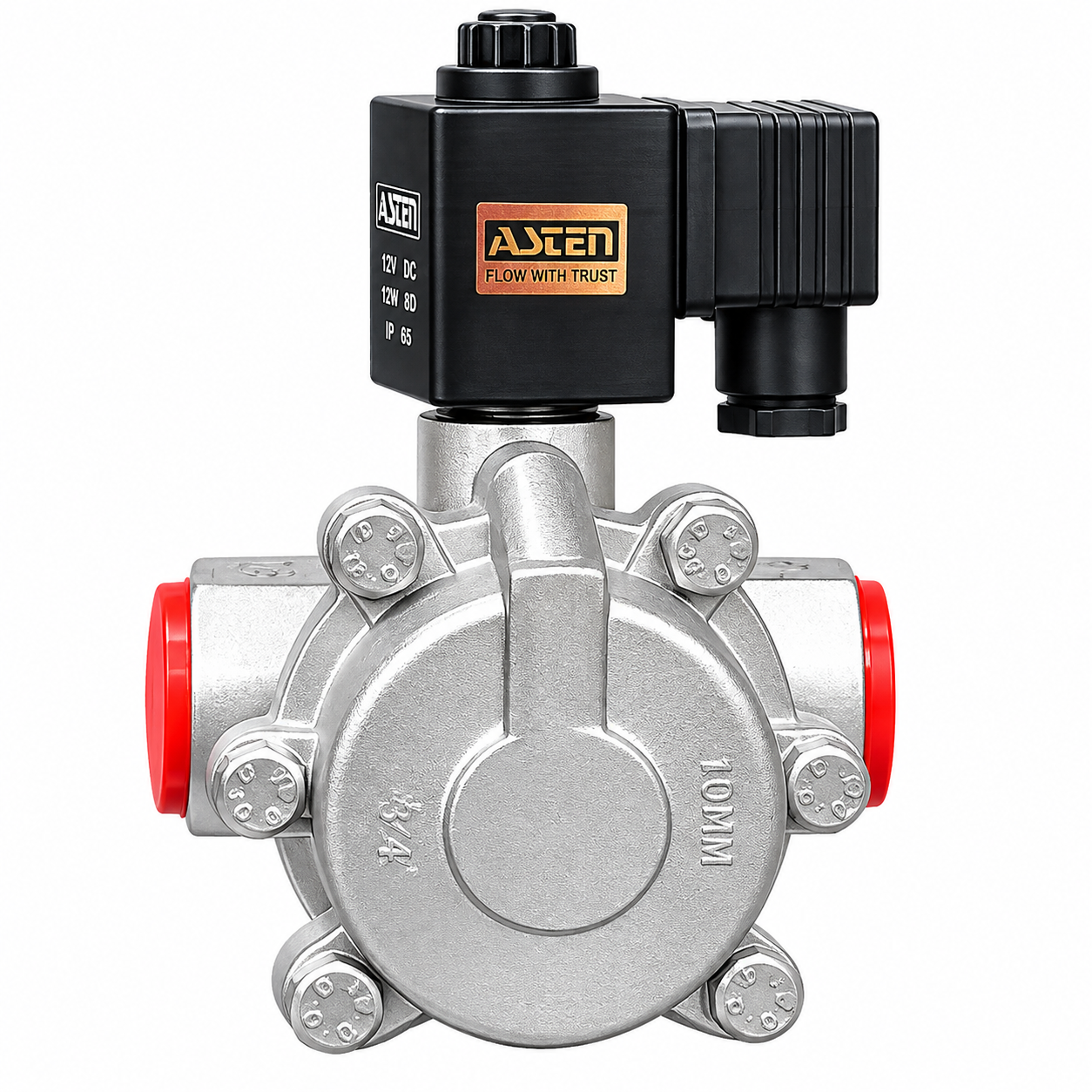
As an industrial high pressure solenoid valve manufacturer, Asten Controls understands the importance of selecting the right valve configuration for specific operating conditions. Factors such as maximum operating pressure, fluid characteristics, temperature, connection size and electrical requirements play an important role in product selection.
Whether you are looking for a high pressure solenoid valve for automated machinery, specialised fluid systems or industrial process equipment, choosing a suitable valve helps support consistent operation and effective flow control.
What Is a High Pressure Solenoid Valve?
A high pressure solenoid valve is an electrically operated valve designed to control the flow of liquids or gases in systems operating at elevated pressures. It uses an electromagnetic coil to actuate an internal mechanism that opens or closes the valve passage.
When electrical power is supplied to the solenoid coil, a magnetic field is generated. This magnetic force moves the internal armature or operating mechanism, changing the valve position and controlling the flow of the operating medium.
Unlike standard solenoid valves, high pressure models are designed for specific pressure conditions and demanding industrial requirements. Their suitability depends on factors such as valve body construction, sealing arrangement, operating mechanism, pressure rating and media compatibility.
A high pressure solenoid valve is commonly used where an industrial system requires electrically controlled fluid or gas flow at pressures beyond the operating range of conventional valve designs.
Key Features of Asten Controls High Pressure Solenoid Valves
Selecting a high pressure solenoid valve requires attention to its construction, operating mechanism and compatibility with the application. The following features are important considerations when evaluating industrial high-pressure valve solutions.
Reliable Electromagnetic Operation
Electromagnetic actuation allows the valve to operate through an electrical control signal. This makes it suitable for automated systems where fluid flow needs to be controlled through control panels, sensors, timers or programmable automation equipment.
The appropriate coil and operating mechanism should be selected according to the required voltage, pressure conditions and operating cycle.
High-Pressure Handling Capability
High-pressure applications require valves designed for the intended operating pressure. The valve body, internal components and sealing arrangement must be suitable for the maximum pressure and operating conditions of the system.
Selecting a valve with an appropriate pressure rating helps support dependable operation and reduces the risk of pressure-related component failure.
Durable Valve Body Construction
The valve body must be compatible with the operating medium, pressure conditions and surrounding environment. Suitable construction materials help provide mechanical strength, durability and resistance to corrosion or chemical interaction.
Material selection should be based on the fluid or gas being controlled and the requirements of the application.
Efficient Flow Control
High pressure solenoid valves provide electrically controlled flow management in automated industrial systems. Their operating mechanism allows equipment to control the movement of fluids or gases according to process requirements.
Valve size, orifice dimensions, flow capacity and pressure differential should be considered to achieve the required flow performance.
Reliable Sealing and Leak Prevention
Sealing components play an important role in maintaining the performance of a high-pressure valve. The selected seals must be compatible with the operating medium, temperature and pressure conditions.
An appropriate sealing arrangement helps minimise leakage and supports dependable valve operation throughout the intended service conditions.
Technical Specifications of High Pressure Solenoid Valve
Technical specifications are essential when selecting a high pressure solenoid valve for industrial applications. The required configuration may vary depending on the operating medium, system pressure, temperature and electrical control requirements.
| Parameter | Specification |
| Valve Type | Piston Operated Solenoid Valve |
| Operation | Normally Closed / Normally Open |
| Media | Water |
| Body Material | Stainless Steel SS304 / SS316 Available on request |
| Piston Material | Stainless Steel |
| Seal Material | PTFE |
| Port Size | 1/2″ to 2″ |
| Operating Pressure | 3 to 40 Bar |
| Connection | BSP / NPT / Flanged |
| Temperature Range | Up to 80°C |
| Voltage | 12V DC, 24V DC, 110V AC, 230V AC |
| Coil Type | Continuous Duty |
| Protection Class | IP65 |
| Application | Industrial Automation, Chemical Processing, HVAC |
| Parameter | Specification |
Working Principle of High Pressure Solenoid Valve
A high pressure solenoid valve operates through electromagnetic actuation. Its internal mechanism responds to an electrical signal to control the flow passage. The exact operating sequence depends on whether the valve uses a direct-acting, pilot-operated or another approved design.
Energised Condition
When the electrical supply is switched on, current flows through the solenoid coil. This creates a magnetic field around the coil, preparing the electromagnetic mechanism to actuate the valve.
Electromagnetic Activation
The magnetic force acts on the internal armature or operating component. Depending on the valve design, this movement changes the position of the sealing element and controls the flow passage.
Valve Opening and Flow Control
In a normally closed configuration, energising the coil generally opens the valve passage, allowing the operating medium to flow when the required pressure conditions are met.
The valve’s ability to open under high-pressure conditions depends on its operating mechanism and specified pressure differential.
De-energised Condition and Valve Closing
When the electrical supply is switched off, the magnetic field reduces. The internal return mechanism moves the valve towards its default position.
For a normally closed valve, this generally closes the flow passage. The default position and response should always be verified against the selected valve model.
Depending on the valve design and application requirements, solenoid valves may operate through different mechanisms to control fluid flow. You can also explore direct acting solenoid valves for applications requiring direct electromagnetic actuation
Types and Configurations of High Pressure Solenoid Valves
High pressure solenoid valves are available in different configurations to suit specific operating conditions and control requirements. The appropriate type depends on the pressure range, flow capacity, electrical control arrangement and application.
Normally Closed High Pressure Solenoid Valve
A normally closed high pressure solenoid valve remains closed when the coil is not energised. When electrical power is supplied, the valve actuates to open the flow passage, subject to its operating conditions.
This configuration is commonly considered where the system should stop fluid or gas flow when electrical power is removed.
Normally Open High Pressure Solenoid Valve
A normally open high pressure solenoid valve remains open when the coil is not energised. When the coil receives an electrical signal, the valve moves towards its closed position.
This configuration may be suitable for applications where the normal operating condition requires an open flow passage.
Direct Acting High Pressure Solenoid Valve
A direct-acting high pressure solenoid valve uses electromagnetic force to move the internal sealing element directly. Its operation does not depend on a pilot pressure differential in the same way as a pilot-operated design.
The suitability of this mechanism depends on the required pressure rating, orifice size and available electromagnetic force. Confirm the approved operating range for the selected model.
Pilot Operated High Pressure Solenoid Valve
A pilot-operated high pressure solenoid valve uses a pilot mechanism to control the main valve opening. Depending on its design, it may use the pressure of the operating medium to assist the main valve’s operation.
The minimum and maximum differential pressure requirements are important when selecting this configuration. It should only be used where the system conditions meet the manufacturer’s specified operating requirements.
Industrial Applications of High Pressure Solenoid Valves
High pressure solenoid valves are used in industrial systems that require electrically controlled flow under demanding pressure conditions. Their application depends on the valve’s approved pressure rating, material compatibility and operating mechanism.
Oil and Gas Industry
In oil and gas installations, high-pressure fluid control components may be required in equipment handling process fluids, gases and specialised operating media. Solenoid valves can support automated control functions where the selected model is suitable for the pressure and service conditions.
Chemical and Petrochemical Plants
Chemical and petrochemical processes often involve fluids with specific pressure, temperature and compatibility requirements. A suitably selected high pressure solenoid valve can help control the flow of compatible process media in automated equipment.
Material and seal compatibility should be evaluated carefully before installation.
Water Treatment and High-Pressure Water Systems
Industrial water treatment equipment and specialised water systems may require electrically controlled valves to manage water flow at elevated pressures.
High pressure water solenoid valves can be considered for suitable systems where the valve’s pressure rating, connection type and water compatibility meet the application requirements.
Industrial Cleaning Equipment
Certain industrial cleaning machines and specialised washing systems operate with pressurised water or cleaning fluids. High-pressure solenoid valves may be used to control the flow in these systems, provided the valve is designed for the required pressure and cleaning medium.
Hydraulic and Pneumatic Systems
Automated hydraulic and pneumatic equipment may require electrically operated valves for controlling compatible fluids or gases. The selected solenoid valve must meet the specific pressure, flow and media requirements of the system.
Not every high pressure solenoid valve is suitable for hydraulic service, so application compatibility must be confirmed before selection.
Manufacturing and Process Industries
Manufacturing facilities use automated fluid control systems across different production processes. High pressure solenoid valves can be considered for machinery and process equipment that requires controlled fluid or gas flow at elevated pressures.
High-pressure fluid systems require appropriate valve selection to maintain reliable operation and protect connected equipment. For applications requiring downstream pressure control, explore our industrial pressure regulation solutions.
High Pressure Solenoid Valve Manufacturer and Supplier in India
Choosing the right high pressure solenoid valve manufacturer and supplier in India is important for industrial applications where operating pressure, flow control and equipment reliability are essential.
Asten Controls provides industrial valve solutions for customers looking for suitable products for their fluid control requirements. Product selection should consider the system’s pressure rating, operating medium, temperature, electrical supply and installation conditions.
Industrial High Pressure Valve Solutions
Different industrial applications require different valve configurations. Factors such as pressure range, valve size, connection type and operating mechanism influence the selection of a suitable high pressure solenoid valve.
Asten Controls can assist customers in identifying an appropriate product configuration based on the technical details and requirements shared for the application.
Technical Assistance and Product Selection
Selecting a high-pressure valve requires more than matching the connection size. The operating pressure, differential pressure, fluid characteristics, temperature and coil specifications should all be considered.
Customers should provide the relevant system details to help determine the suitable valve configuration and avoid selecting a product outside its approved operating range.
Industrial Supply and Customer Support
Industrial buyers often require clear product information and assistance during the procurement process. A reliable high pressure solenoid valve supplier should help customers understand available configurations, technical requirements and product suitability.
Contact Asten Controls to discuss your high-pressure fluid control requirements and obtain product information for your application.
How to Select the Right High Pressure Solenoid Valve?
Selecting the right high pressure solenoid valve helps ensure compatibility with the system and supports dependable operation. Before purchasing, evaluate the following technical factors.
Maximum Operating Pressure
Identify the normal operating pressure and the maximum pressure the system may experience. Select a valve with an approved pressure rating suitable for the actual application.
Consider possible pressure fluctuations and transient conditions where relevant. Never assume that a standard solenoid valve can safely operate at a higher pressure without an appropriate rating.
Type of Operating Medium
Identify whether the valve will control water, air, gas, oil or another process fluid. The valve body and sealing materials must be compatible with the operating medium.
For chemical or specialised fluids, confirm compatibility with the valve manufacturer before finalising the selection.
Valve Size and Flow Capacity
The valve size and flow capacity should match the system’s required flow rate. Consider the port connection, orifice size and pressure drop when evaluating the product.
An incorrectly sized valve may affect system performance, response and overall process efficiency.
Voltage and Electrical Requirements
Check the available electrical supply and select a compatible solenoid coil. Common electrical parameters include supply voltage, AC or DC operation, frequency, power consumption and coil protection rating.
Always verify the electrical specifications of the selected model before installation.
Body and Seal Material Compatibility
The valve body and seals must withstand the operating pressure and remain compatible with the operating medium and environment.
Material selection should consider corrosion resistance, temperature, fluid composition and the manufacturer’s approved material options.
Operating Temperature and Differential Pressure
Check the minimum and maximum operating temperature of the application. Temperature can affect sealing performance and material suitability.
For pilot-operated valves, also verify the required minimum and maximum differential pressure. The system must provide the operating conditions required by the selected valve design.
High Pressure Solenoid Valve vs Standard Solenoid Valve
High pressure solenoid valves and standard solenoid valves both use electromagnetic actuation to control fluid flow. However, their design requirements and operating limits may differ.
| Comparison Parameter | High Pressure Solenoid Valve | Standard Solenoid Valve |
| Operating Conditions | Designed for specified elevated-pressure applications | Designed for its stated pressure range |
| Construction | Body and internal components selected for the approved pressure rating | Construction depends on the standard valve’s rating |
| Sealing Arrangement | Must suit the specified pressure, medium and temperature | Must suit its specified operating conditions |
| Application | High-pressure fluid and gas control systems where approved | General industrial and automation applications |
| Selection Criteria | Pressure rating, differential pressure, flow, media and temperature | Pressure, flow, media and temperature |
The most important difference is the approved operating range of the valve. A standard solenoid valve should not be used in a high-pressure system unless its product rating explicitly permits the required operating conditions.
Why Choose Asten Controls for High Pressure Solenoid Valves?
Selecting a High Pressure Solenoid Valve supplier involves evaluating product suitability, technical information and support during the purchasing process.
Asten Controls aims to support industrial customers looking for suitable valve solutions for their operating requirements.
Reasons to consider Asten Controls include:
- Application-Focused Product Selection: Product recommendations can be evaluated against the operating pressure, medium, temperature and system requirements.
- Industrial Valve Solutions: A range of valve solutions can help address different industrial fluid control requirements.
- Technical Information: Relevant product specifications help customers assess compatibility before procurement.
- Customer Assistance: Support during product selection can help clarify technical requirements and configuration options.
- Enquiry-Based Support: Customers can share their application details to discuss a suitable valve solution.
For product availability, technical specifications and configuration details, contact the Asten Controls team.
Frequently Asked Questions About High Pressure Solenoid Valves
What is a high pressure solenoid valve?
A high pressure solenoid valve is an electrically operated valve designed to control the flow of fluids or gases in systems operating at elevated pressures. It uses an electromagnetic coil to actuate an internal mechanism that opens or closes the flow passage.
How does a high pressure solenoid valve work?
When electrical power is supplied to the solenoid coil, it generates a magnetic field that moves the internal operating mechanism. This changes the valve position and controls the flow of the operating medium. The exact mechanism depends on whether the valve is direct acting or pilot operated.
What is the maximum pressure a solenoid valve can handle?
The maximum pressure depends on the specific valve model, body construction, sealing arrangement, operating mechanism and manufacturer-approved rating. There is no single pressure limit that applies to all solenoid valves. Always check the product datasheet before installation.
Which materials are suitable for high pressure solenoid valves?
Suitable materials depend on the operating medium, pressure, temperature and environmental conditions. The valve body and seals must be compatible with the application. Confirm the approved material options with the manufacturer before selecting a valve.
Where are high pressure solenoid valves used?
High pressure solenoid valves may be used in suitable oil and gas equipment, chemical processing systems, industrial water systems, cleaning equipment, automated machinery and manufacturing processes. The valve must be rated for the specific operating conditions.
What is the difference between direct acting and pilot operated high pressure solenoid valves?
A direct-acting valve uses electromagnetic force to move the sealing element directly. A pilot-operated valve uses a pilot mechanism to control the main valve, often with assistance from the pressure of the operating medium. Pilot-operated designs generally have specific differential pressure requirements.
How do I select the right high pressure solenoid valve?
Consider the maximum operating pressure, operating medium, flow rate, valve size, electrical supply, body and seal materials, temperature and differential pressure. Providing these details to the supplier helps identify a suitable valve configuration.
Where can I find a high pressure solenoid valve manufacturer and supplier in India?
You can contact Asten Controls to discuss your high pressure solenoid valve requirements. Share your application details, operating pressure, medium, temperature, connection size and electrical specifications to help the team evaluate a suitable product.
Contact Asten Controls for High Pressure Solenoid Valve Requirements
Looking for a suitable high pressure solenoid valve manufacturer in India for your industrial application?
Connect with Asten Controls to discuss your requirements and obtain product information for your fluid control system. Whether you need a valve for high-pressure water, compatible gases or specialised industrial processes, sharing the correct operating details will help identify an appropriate configuration. Asten Controls offers a wide range of industrial valve products for different process, automation and flow-control applications.
Contact Asten Controls today for product enquiries, technical details and high pressure solenoid valve requirements.


