
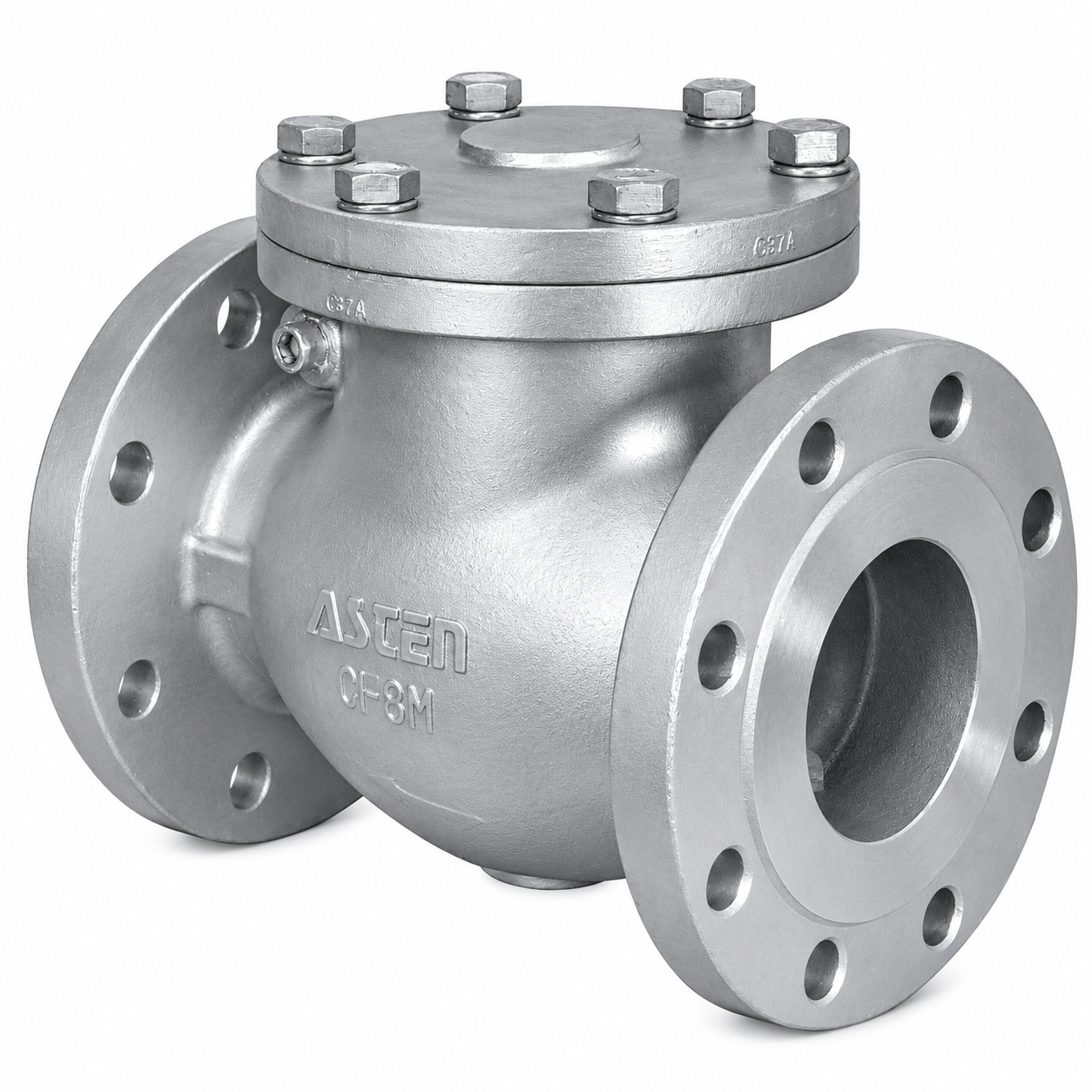
Swing Type Check Valve
DescriptionSwing Type Check Valve Manufacturer
Asten Controls is a swing type check valve manufacturer and supplier in India. We offer swing type check valves designed to allow fluid flow in one direction while helping prevent reverse flow in industrial piping systems. These valves operate automatically in response to fluid pressure, making them an important component in applications where backflow prevention is required.
As an industrial valve manufacturer in Ahmedabad, India, Asten Controls provides valve solutions for different industrial flow control requirements. Our swing check valve solutions are intended for use in piping systems where reliable non-return operation is essential.
Whether used in water distribution networks, industrial processing facilities, pumping systems or oil and gas applications, a properly selected swing check valve helps protect connected equipment and supports the efficient operation of fluid handling systems.
Reliable Backflow Prevention for Industrial Piping Systems
Reverse flow in a pipeline can affect system performance and potentially damage connected equipment such as pumps, compressors and other process components. A swing check valve helps address this issue by automatically closing when the flow reverses.
Its hinged disc mechanism allows the valve to respond to changes in fluid flow without requiring manual operation or an external control mechanism.
Designed for Unidirectional Fluid Flow
A swing type check valve is designed to permit fluid movement in the intended direction and restrict flow in the opposite direction. During normal operation, the disc moves away from the seat as fluid passes through the valve. When forward flow stops or reverses, the disc returns towards the seat to restrict backflow.
This automatic operation makes swing check valves suitable for various industrial applications where maintaining the correct flow direction is important.
What Is a Swing Type Check Valve?
A swing type check valve is a mechanical non-return valve used in pipelines to allow fluid to flow in one direction and prevent it from flowing backwards. It uses a hinged disc, also known as a flap, which moves freely in response to the pressure and direction of the flowing medium.
When fluid enters the valve in the correct direction, the pressure pushes the disc away from its seat, allowing the medium to pass through. When the flow decreases, stops or reverses, the disc moves back towards the seat and restricts reverse flow.
Unlike manually operated valves, a swing check valve works automatically without requiring an operator to open or close it.
The design is commonly considered for applications involving water, oil, steam, gas and other compatible process media, depending on the valve’s construction, materials and operating conditions.
How Does a Swing Check Valve Work?
A swing check valve operates through a simple mechanical arrangement consisting of a valve body, hinged disc, hinge pin and seating arrangement. Its operation depends on the direction and pressure of the fluid flowing through the pipeline.
Forward Flow Opens the Valve Disc
When fluid flows in the intended direction, the pressure exerted by the medium pushes the hinged disc away from its seat. The disc swings open, allowing fluid to pass through the valve body.
The extent to which the disc opens depends on the flow conditions and valve design. Under suitable operating conditions, this movement allows fluid to pass without requiring manual intervention.
Reverse Flow Causes the Disc to Close
When forward flow decreases or stops, the disc moves towards its closed position under the influence of gravity, reverse pressure and the valve’s mechanical arrangement.
If reverse flow develops, the pressure acting on the disc helps bring it against the valve seat, restricting the movement of fluid in the opposite direction.
The effectiveness of sealing depends on factors such as seat design, material selection, pressure conditions and valve configuration.
Key Features of Swing Type Check Valves
Swing check valves are used in industrial piping systems because of their straightforward operating mechanism and automatic non-return functionality. Their suitability depends on the application, valve design and selected construction materials.
Automatic Backflow Prevention
The valve automatically responds to changes in flow direction, helping restrict reverse flow without requiring manual operation or an external power source.
Swing Disc Design
The hinged disc moves away from the valve seat during forward flow and returns towards the seat when the flow stops or reverses. This design is commonly used in applications where a swing-type non-return mechanism is appropriate.
Material and Configuration Options
Swing check valves can be selected in different body, disc and seating materials depending on the fluid characteristics, pressure, temperature and operating environment.
Material and configuration selection should be based on the actual application requirements.
Suitability for Different Industrial Applications
Swing check valves can be considered for water supply, wastewater treatment, oil and gas, chemical processing, power generation and industrial pumping systems, subject to appropriate design and material selection.
Swing Type Check Valve Technical Specifications
Selecting the correct swing type check valve requires careful consideration of its size, pressure rating, body material, disc construction, end connections and operating conditions.
Asten Controls can assist buyers in identifying suitable valve configurations according to their industrial piping requirements.
| Parameter | Specification |
| Valve Type | Swing Type Check Valve |
| Design | Hinged Disc Type |
| Media | Water, Oil, Gas, Air, Steam |
| Body Material | Cast Iron / Ductile Iron / Cast Steel / Stainless Steel |
| Disc Material | Cast Steel / Stainless Steel |
| Hinge Pin Material | Stainless Steel |
| Seat Material | Metal Seat |
| Size Range | DN 40 to DN 600 |
| Pressure Rating | PN10 / PN16 / PN25 / Class 150 / Class 300 |
| End Connection | Flanged / Screwed |
| Temperature Range | Depends on body and seat material |
Industrial Applications of Swing Check Valves
Swing check valves are used across different industries to restrict unwanted reverse flow and support the protection of pumps, pipelines and connected equipment.
Their suitability depends on the process medium, operating conditions, installation arrangement and required sealing performance.
Water Supply and Wastewater Treatment
In water distribution and wastewater treatment facilities, swing check valves help prevent reverse flow in pumping and pipeline systems.
They can be considered for:
- Water transmission pipelines.
- Pump discharge lines.
- Water treatment facilities.
- Wastewater collection systems.
- Industrial water distribution networks.
Oil and Gas Processing
Oil and gas facilities use various valve types to manage fluid movement across pipelines, processing equipment and utility systems.
Swing check valves can be used in suitable applications to restrict reverse flow and help protect pumps and other connected equipment.
Typical application areas include:
- Oil transfer systems.
- Process fluid pipelines.
- Pump discharge connections.
- Industrial utility lines.
- Refinery piping systems.
The valve construction and material selection must be suitable for the medium and the applicable operating and safety requirements.
Chemical and Petrochemical Industries
Chemical and petrochemical facilities handle different process fluids under varying pressure and temperature conditions.
Swing check valves with suitable body and sealing materials can be considered for applications where chemical compatibility and backflow prevention are important.
Proper material selection is essential to address corrosion, chemical exposure and process conditions.
Power Plants and Industrial Process Systems
Power generation and industrial processing facilities use piping networks to transport water, steam and other process media.
Swing check valves may be used in suitable utility and process lines to help maintain the intended flow direction and protect connected equipment.
Their selection should account for operating temperature, pressure, fluid characteristics and the requirements of the particular system.
Pumping and Pipeline Systems
Pumping systems often require non-return valves to help prevent reverse flow when a pump stops or system pressure changes.
Swing check valves can be installed in suitable pump discharge and pipeline arrangements to restrict backflow and support equipment protection.
They are particularly worth considering in systems where their flow characteristics and installation requirements match the application.
Benefits of Using a Swing Type Non Return Valve
A swing type non-return valve offers several practical benefits in industrial piping systems when correctly selected and installed.
Helps Prevent Reverse Flow
The automatic closing mechanism helps restrict fluid movement in the reverse direction, reducing the possibility of unwanted backflow within the pipeline.
Supports Efficient Fluid Movement
The swing disc design provides a relatively unobstructed flow path when fully open. This can be advantageous in suitable applications where maintaining flow with limited resistance is important.
Actual pressure loss depends on valve size, design, flow velocity and operating conditions.
Helps Protect Pumps and Connected Equipment
Reverse flow can affect pumps and other connected components. A properly selected swing check valve helps reduce this risk by restricting backflow when forward flow stops or reverses.
It should be noted that check valves are not a substitute for all pump protection or surge control arrangements. Additional protective measures may be necessary depending on the system design.
How to Select the Right Swing Type Check Valve
Choosing the right swing check valve involves understanding the pipeline arrangement, operating conditions and characteristics of the fluid being handled and contacting the right swing type check valve manufacturer in India.
A suitable valve helps improve system compatibility, operational reliability and backflow prevention.
Consider the Fluid and Operating Conditions
Begin by identifying the medium that will pass through the valve. Water, oil, steam, gas and chemicals can have different requirements in terms of material compatibility, temperature and sealing.
Consider the following:
- Fluid composition and properties.
- Presence of suspended solids.
- Corrosive or abrasive characteristics.
- Normal operating flow conditions.
- Possibility of pressure fluctuations.
Check Pressure, Temperature and Size Requirements
The selected valve should be suitable for the pipeline’s operating conditions.
Important parameters include:
- Nominal pipe size.
- Normal operating pressure.
- Maximum design pressure.
- Operating temperature range.
- Required flow capacity.
- Pressure class and applicable design requirements.
Correct sizing is important because unsuitable flow conditions can affect valve operation and closing performance.
Select Suitable Materials and End Connections
The valve body, disc, seat and internal components should be compatible with the operating medium and environmental conditions.
End connections should also match the pipeline arrangement to ensure correct installation and sealing.
Where required, consider metal-to-metal or soft-seated configurations based on the application’s sealing requirements.
Why Choose Asten Controls for Swing Check Valves?
Asten Controls LLP is a swing type check valve manufacturer and supplier in India, offering a wide range of industrial valves for different industrial applications. The company has been operating since 2008 and serves a range of industries, including oil and gas, wastewater treatment, power and energy, metals and mining, construction and pharmaceuticals.
Industrial Valve Manufacturing Experience
Asten Controls brings experience in industrial valve manufacturing and fluid control solutions. Its product portfolio includes different types of industrial valves designed for a range of application requirements.
Product Selection for Different Applications
Different industrial applications require different valve configurations. Asten Controls can assist customers in discussing their requirements and identifying suitable product options based on the intended application.
Support for Product Enquiries and Specifications
Buyers can contact Asten Controls to request product details, technical specifications, material information and quotations for their swing check valve requirements.
Our team can help clarify the information required to select a suitable valve for your piping system.
Frequently Asked Questions for Swing Type Check Valve
What Is the Difference Between a Swing Check Valve and a Non Return Valve?
A non-return valve is a general category of valve designed to allow fluid flow in one direction and restrict reverse flow. A swing check valve is a specific type of non-return valve that uses a hinged disc to open and close automatically in response to changes in fluid flow.
Where Are Swing Type Check Valves Used?
Swing type check valves are commonly used in water supply systems, wastewater treatment plants, oil and gas facilities, chemical processing units, power plants and industrial pumping systems. They are suitable for applications where automatic backflow prevention is required and the operating conditions are compatible with the valve design.
Can a Swing Check Valve Be Installed Vertically?
Yes, a swing check valve can be installed in certain vertical pipelines, generally where the flow direction is upwards. However, installation suitability depends on the valve design and manufacturer recommendations. Standard swing check valves are commonly installed in horizontal pipelines, with the hinge arrangement positioned correctly.
Which Materials Are Available for Swing Check Valves?
Swing check valves can be manufactured using materials such as cast iron, carbon steel, cast steel, stainless steel and bronze. The appropriate material depends on the operating medium, pressure, temperature and corrosion requirements. Contact Asten Controls for available material options.
How Do I Select the Right Swing Check Valve?
To select a suitable swing check valve, consider the pipeline size, operating pressure, temperature, fluid characteristics, body material, seat configuration and end connection. You should also review the installation orientation and flow requirements before finalising the valve selection.
How Can I Request a Quote for a Swing Type Check Valve?
You can contact Asten Controls through the website enquiry form, telephone or email to request a quotation. Share your required valve size, pressure rating, material, end connection and application details to help the team understand your requirements.
Request a Quote for Swing Type Check Valves
Looking for a reliable swing type check valve manufacturer for your industrial piping system?
Asten Controls offers industrial valve solutions for different fluid handling requirements. Whether you need a swing check valve for water distribution, pumping systems, industrial processing or other suitable applications, our team can assist you with product enquiries and technical information.
Contact Asten Controls to discuss your application requirements, request product specifications and obtain a quotation for swing type check valves.


